
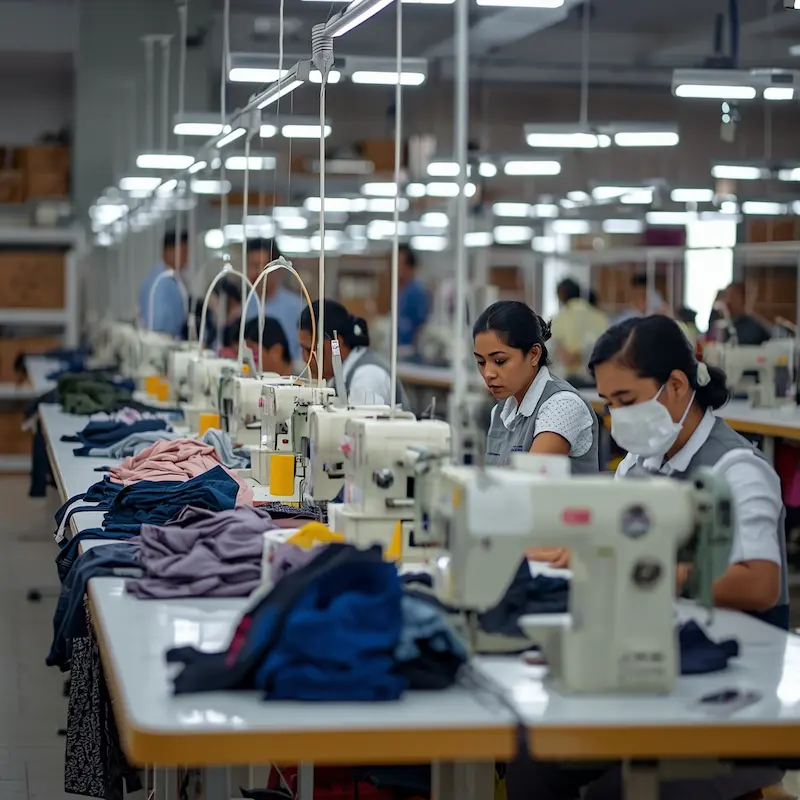
Garment sector challenges after the election are now shaping Bangladesh’s economic direction. The garments sector challenges after election affect factories, exporters, workers, and investors across the country.
However, the economy does not reset overnight. It still carries pressure from the last two years. The garments sector feels that pressure first. As a result, garments sector challenges after the election appear in daily production planning.
RMG is not just another industry in Bangladesh. It supports around 4 million workers directly. It also generates more than 80% of the country’s export earnings. For that reason, the post-election period becomes a serious test for the entire economy.You can review recent Bangladesh RMG export statistics to understand how deeply the sector supports national growth.
Now the question becomes simple:
Can Bangladesh protect its garment dominance while the economy stays under stress and reduce garment sector challenges after the election at the same time?
Garments Sector Challenges After Election and Economic Pressure
Many people expected the election to calm the market. However, major economic pressures remain.
Inflation continues to hurt household budgets. Food prices remain high. Rent keeps increasing.
At the same time, businesses face cost uncertainty. They also struggle with weak consumer confidence.
Bangladesh still deals with foreign reserve pressure. That pressure affects the dollar market directly. In turn, the dollar market affects garments immediately. As a result, garments sector challenges after the election become more visible.
Garments Sector Challenges After Election: Dollar Crisis
Garment factories earn dollars. Yet they also depend on dollars.
They import cotton, chemicals, dyes, spare parts, and machinery. They also bring in accessories and trims from abroad.
So when the dollar becomes expensive, factories feel the impact instantly. In many cases, garment sector challenges after election begin at this stage.
LCs open slowly.
Raw materials arrive late.
Prices increase suddenly.
Production planning becomes unstable.
Because of this, shipment deadlines become harder to maintain.
After elections, governments often take stronger financial decisions. They may adjust the exchange rate. They may tighten imports. They may change banking rules.
Therefore, the RMG sector must stay alert. Policy shifts can quickly reshape garment sector challenges after election.
Garments Sector Challenges After Election and Wage Inflation
Inflation does not only affect consumers. It also changes worker expectations.
Garment workers now speak more openly. They see food prices rising every month. They also feel pressure from higher transport and medical costs.
So wage demands will not disappear after elections. Instead, they may increase. As this happens, garments sector challenges after the election become more sensitive inside factories.
At the same time, factory owners face another reality. Buyers continue to push for lower prices. They also demand faster delivery schedules.
This situation creates a painful triangle:
Workers want higher pay.
Buyers want lower costs.
Factories want survival.
Because of this tension, labor stability remains a key part of the garment sector’s challenges after the election.
Buyers Are Changing Their Game
A few years ago, buyers focused mainly on three areas:
price
quality
lead time
Now, however, they expect much more.
They demand sustainability proof. They ask for compliance evidence. They want complete transparency.
Most global brands now require:
carbon footprint data
renewable energy usage
chemical safety documentation
water treatment records
ESG reporting
traceability from yarn to shipment
This shift changes the rules of the game. Bangladesh already leads in green factories. In fact, the country has the highest number of LEED-certified garment factories in the world.
Still, many small and mid-level factories struggle. They cannot invest at the same level. They also lack structured reporting systems.
Because of that, a new risk appears.
Factories may lose orders not because of poor stitching, but because of weak documentation. That reality increases garment sector challenges after election, especially for smaller factories.
Energy Costs Will Stay a Major Threat
Garment factories depend heavily on electricity and gas. They also use generators and boilers to maintain production.
Bangladesh continues to face gas shortages in several industrial areas. Meanwhile, electricity tariffs keep rising.
After elections, governments often review energy pricing. They adjust rates to manage subsidies and fiscal gaps.
When that happens, factories feel the impact immediately. This situation adds another layer to garment sector challenges after the election.
Higher energy costs increase production expenses. As a result, factories lose price competitiveness.
Meanwhile, buyers focus only on final prices. They do not consider local energy constraints.please you can read this article.
Global Demand Remains Uncertain
The global market still shows signs of caution.
Many Western consumers continue to spend carefully. They reduce fashion purchases when inflation remains high.
This trend matters deeply because Bangladesh depends heavily on EU and US markets.
Even a small slowdown in these regions can reduce order volumes.
Moreover, brands now divide orders across multiple countries. They do this to reduce sourcing risks.
Because of this shift, garments sector challenges after the election also come from global demand uncertainty.
Competition Has Become Sharper
Bangladesh no longer competes only with China.
Today, it competes with countries that offer faster lead times and stronger logistics systems.
Vietnam performs well in value-added products. India expands aggressively. Indonesia attracts new buyers. Turkey serves Europe with shorter delivery time.
These competitors often provide:
faster port operations
smoother customs clearance
stronger banking services
more diversified product ranges
Bangladesh still leads in large-scale production. However, the market now values speed and flexibility.
Therefore, Bangladesh must upgrade product diversity and shorten lead times. Otherwise, garment sector challenges after the election will grow through lost market share.
Political Stability Still Shapes Buyer Confidence
Buyers do not only compare prices. They also evaluate stability.
They ask practical questions:
Will highways remain secure?
Will ports operate smoothly?
Will protests delay shipments?
Will factories face unexpected shutdowns?
Even minor disruptions can create concern. As a result, buyers may quickly shift orders elsewhere.
For this reason, post-election stability matters deeply. It directly influences export confidence. It also directly affects garment sector challenges after the election.
The Banking System Adds Another Layer of Stress
Many factories depend on working capital loans. They also rely on efficient LC processing.
However, Bangladesh’s banking sector faces ongoing challenges:
high default loans
liquidity pressure
stricter loan approvals
delayed foreign payments
After elections, regulators often tighten financial rules. While this strengthens stability, it also makes financing more difficult.
Consequently, factories may experience cash flow pressure. This becomes another important part of garments sector challenges after election.
The Next 12–24 Months: Key Challenges Ahead
The post-election period may not remain calm for long. Instead, the RMG sector will face several important tests connected to garments sector challenges after election.
Currency adjustments
The government may allow more exchange rate flexibility. That could increase import costs again.
Higher compliance and monitoring
International scrutiny may grow. Buyers may demand additional audits.
Rising wage pressure
Workers will continue to seek adjustments. Inflation makes this unavoidable.
Higher cost of borrowing
Interest rates may remain high. That will strain cash flow.
Product diversification pressure
Bangladesh must move beyond basic items. Otherwise, competitors will capture higher-margin products.
The Human Story Behind the Numbers
People often discuss garments in terms of export earnings and GDP figures.
Yet the real story unfolds inside factories.
It lives in the merchandiser who negotiates for one extra cent per piece.
It lives in the manager who works late to meet shipment deadlines.
It lives in the worker who calculates monthly expenses carefully.
It lives in the small factory owner who balances risk every single day.
After the election, everyone hopes for stability. Still, stability does not arrive automatically. That is why garments sector challenges after election feel deeply personal for millions of families.
The sector must build resilience. It must plan smarter. It must modernize faster.
FAQ 1: What are the garments sector challenges after election in Bangladesh?
Garments sector challenges after election include dollar pressure, inflation-driven costs, wage expectations, buyer compliance demands, and energy price uncertainty.
FAQ 2: Why does the dollar rate increase garments sector challenges after election?
Factories need dollars for imports like cotton, dyes, chemicals, and machinery. A higher dollar raises input costs and delays LCs, which increases garments sector challenges after election.
FAQ 3: How do buyers influence garments sector challenges after election?
Buyers now demand sustainability proof, ESG reporting, and traceability. Many factories struggle with these requirements, so garments sector challenges after election become stronger.
FAQ 4: Do energy prices matter for garments sector challenges after election?
Yes. Rising electricity and gas costs increase production costs. Buyers compare prices across countries, so energy costs directly expand garments sector challenges after election.
FAQ 5: What should factories do to reduce garments sector challenges after election?
Factories can improve productivity, reduce lead time, strengthen compliance documentation, invest in efficiency, and diversify products to reduce garments sector challenges after election.
Conclusion: The Election Ends, But the Real Challenge Begins
Bangladesh’s garments sector has survived many storms. It overcame COVID-19 disruptions. It handled order cancellations. It managed supply chain shocks.
Now, however, it faces a different type of pressure.
This moment demands transformation. Survival alone will not be enough.
Factories must improve productivity. They must strengthen compliance systems. They must invest in sustainability. They must modernize operations.
Bangladesh still holds strong advantages: scale, experience, and workforce strength.
Even so, the post-election economy will test that strength. And garments sector challenges after election will test operational resilience as well.
The next chapter will reward factories that adapt quickly.
The election may be over.
But global competition continues to intensify.

very good and inforantive artilce
Very good and informative articles